From Artificial Intelligence to Intelligent Systems: How AI Is Evolving Beyond Prediction Toward Reasoning and Decision-Making
The New Era of Artificial Intelligence
Artificial Intelligence (AI) has experienced a remarkable transformation over the last several decades. Early AI systems depended on manually designed rules, while modern systems learn complex patterns from massive datasets using machine learning and deep learning techniques.
Today, AI systems can recognize objects, generate human-like text, analyze medical images, translate languages, and assist scientific discovery.
However, the next generation of AI is moving beyond prediction.
The future direction of AI research is toward intelligent systems — systems that can:
- perceive their environment,
- learn continuously,
- reason about problems,
- make decisions,
- interact naturally with humans.
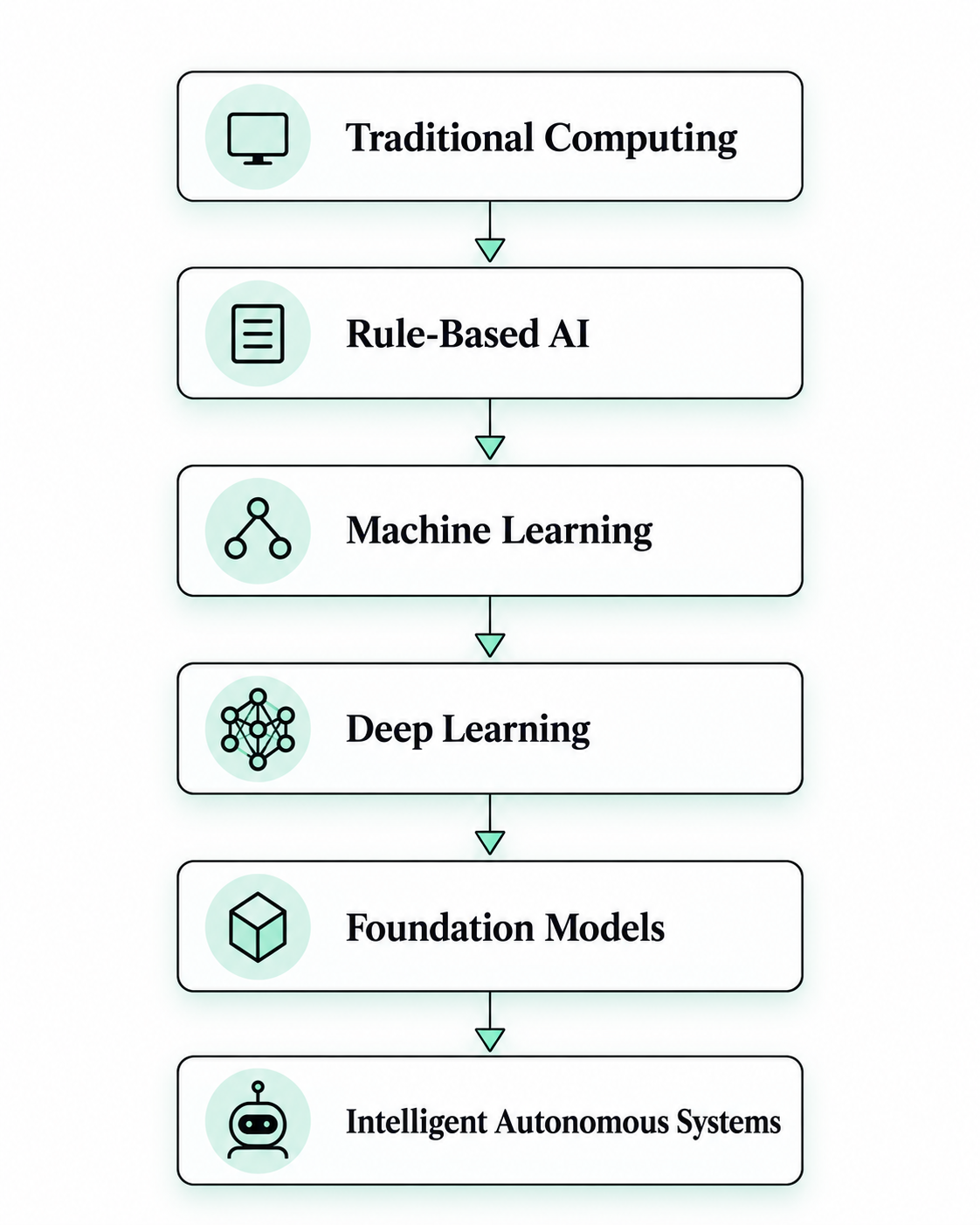
1. The Evolution of AI: From Rules to Intelligence
The introduction of transformer architectures significantly changed modern AI research by replacing sequential processing approaches with attention-based mechanisms that allow models to capture relationships across data more efficiently (Vaswani et al., 2017).
2. From Machine Learning Models to Intelligent Systems
A conventional machine learning model usually performs a specific function:
Example:
Input Data

     ↓
Machine Learning Model

     ↓
Prediction
Example:
Medical Image

      ↓
CNN Model

      ↓
Disease Classification
The system answers:
“What is this?”
An intelligent system attempts to answer:
“What is this, why is it happening, and what should be done next?”
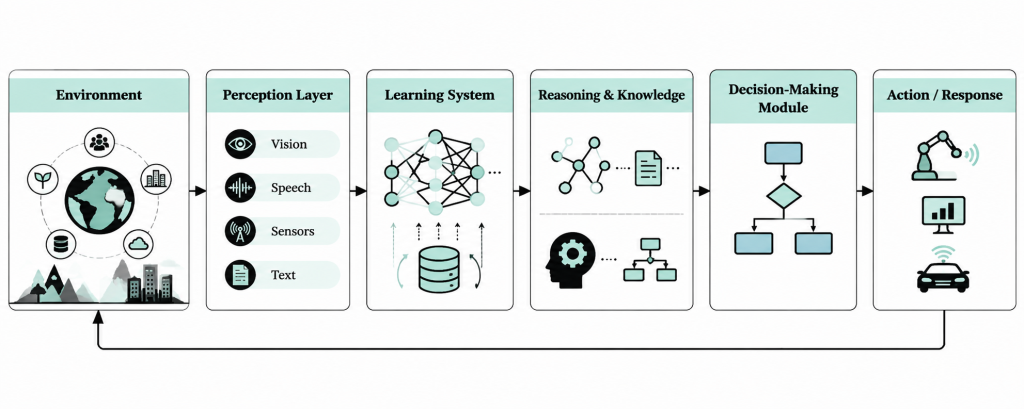
A more advanced architecture looks like:
3. Core Components of Intelligent Systems
3.1 Perception: Giving Machines the Ability to Understand
Human intelligence begins with perception.
AI perception includes:
- Computer Vision
- Natural Language Processing
- Speech Recognition
- Sensor Processing
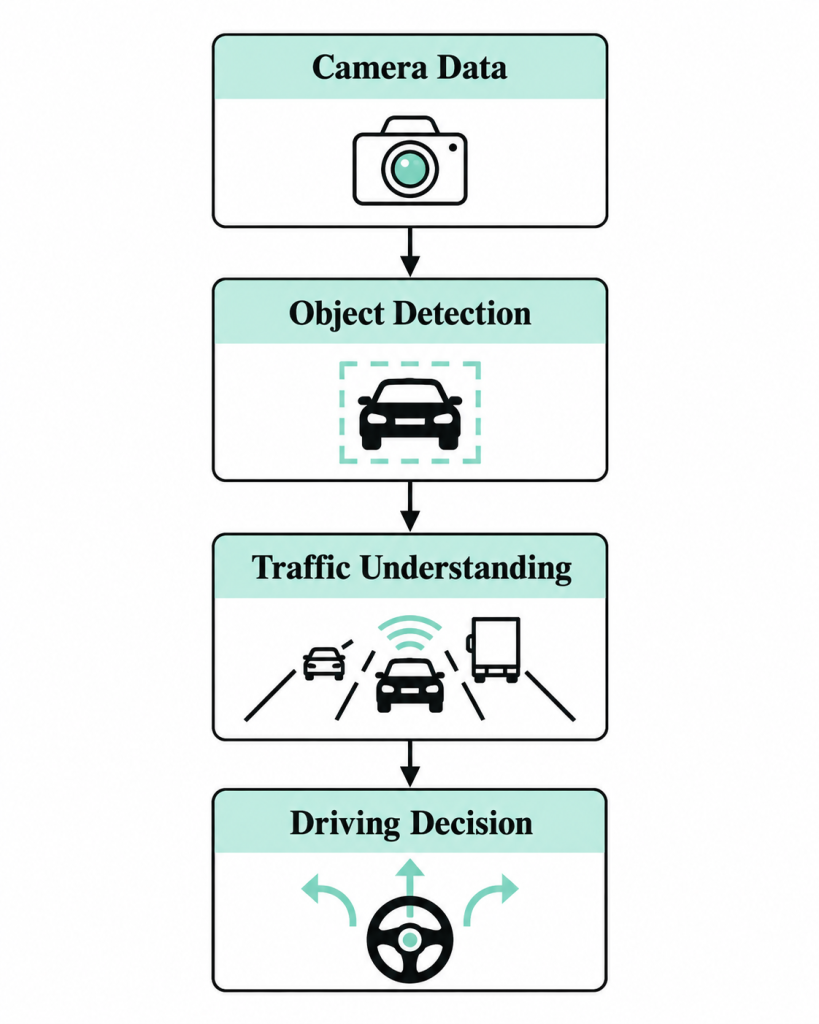
Example:
A self-driving vehicle must understand:
Modern AI systems use deep neural networks to extract meaningful representations from complex data.
3.2 Learning: The Ability to Improve
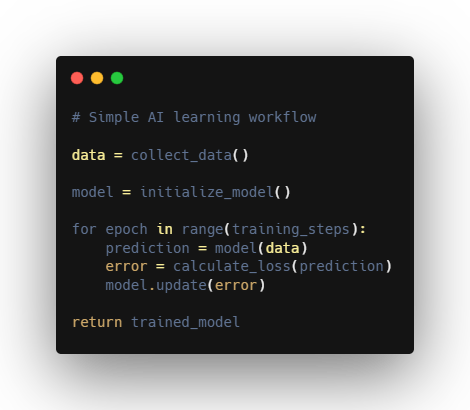
Machine learning allows systems to improve from experience.
A simplified learning process:
More Experience
↓
Better Representation
↓
Improved Decisions